
Spurs sacked Igor Tudor, but Venkatesham and Lange are out of excuses
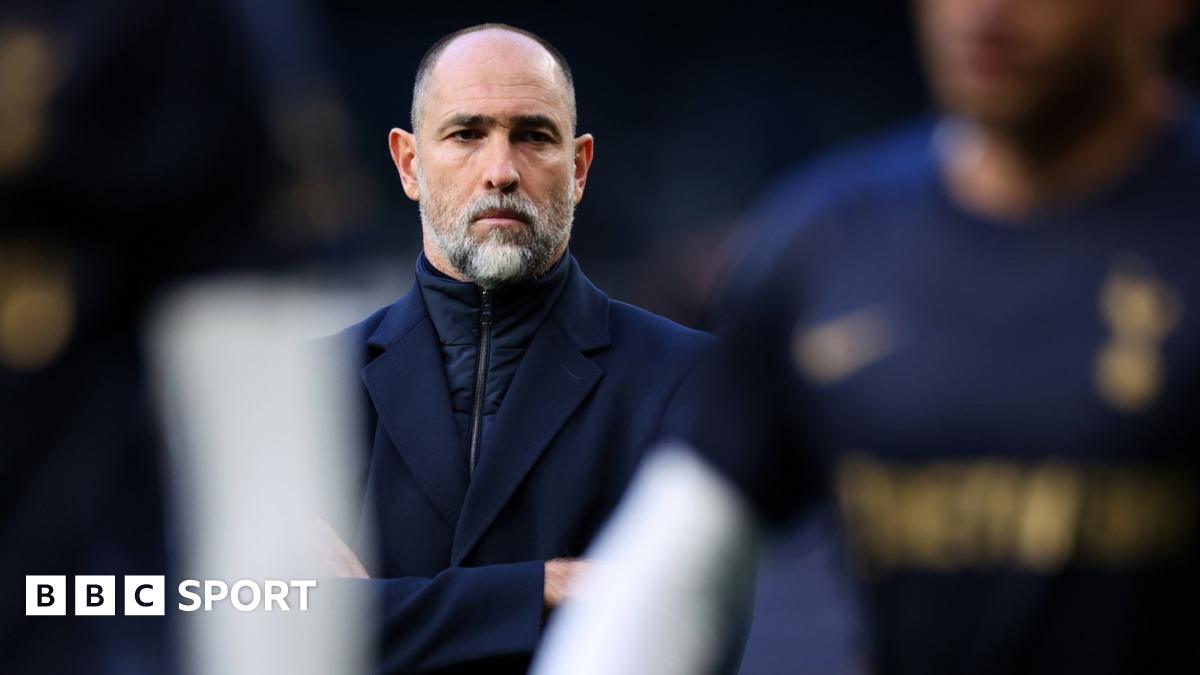
The Inevitable Collapse of a Doomed Experiment
Tottenham Hotspur finally did the obvious thing, pulling the plug on the Igor Tudor experiment before the season completely spiraled into the abyss. As the BBC noted this week, the club has addressed the error. It wasn't a masterstroke of decisive leadership. It was an act of desperate self-preservation from a boardroom that realized the house was actively burning down.
When you hire a manager whose entire tactical philosophy is built on extreme, high-risk man-to-man marking across the entire pitch, you had better have the personnel to execute it. Spurs didn't. They never did. Yet, chief executive Vinai Venkatesham and sporting director Johan Lange somehow convinced themselves that Tudor was the man to elevate a squad built for a completely different brand of football.
The warning signs were not subtle. They were spray-painted in neon across the training ground in Enfield from the very first week. You could see it in the disjointed pressing traps during the early matches. You could see it in the massive, exploitable spaces left behind Pedro Porro and Destiny Udogie. Most damningly, you could see it in the slumped shoulders and heavy legs of a dressing room that looked mentally and physically fried by mid-season.
Tudor's departure was necessary, completely unavoidable by the end. But framing his exit as a solution completely misses the point. The fundamental error wasn't firing him late; the error was hiring him in the first place.
The Boardroom's Blame Game Ends Here
This brings us to the men upstairs. The pressure is completely on the front office now. The margin for error is effectively zero.
Chief executive Vinai Venkatesham and sporting director Johan Lange must get the next Tottenham appointment correct or else they could follow Igor Tudor, writes Phil McNulty.
That is putting it mildly. Venkatesham was brought in to modernize the club's structure. He was supposed to move Tottenham past the chaotic, personality-driven hiring cycles of the Daniel Levy era. Lange was supposed to be the analytical brains, the sporting director who aligns recruitment with a clear, uncompromising tactical vision.
The Tudor appointment shattered that illusion entirely. It looked remarkably like the old Tottenham—chasing a trendy tactical flavor without doing the grueling underlying work of squad mapping. If Lange's data models suggested this group of players was suited to Tudor's extreme physical demands, then the models are broken. If the models said otherwise and they hired him anyway, then the entire process is broken.
You cannot preach a long-term, sustainable vision while hiring a manager whose methods historically burn squads out within 18 months. It was a glaring contradiction from the moment Tudor held the scarf up for his unveiling photos.
Tactical Autopsy: Why Man-Marking Failed
Let’s look at the actual football, because that’s where the Venkatesham-Lange axis really failed their due diligence. You cannot analyze this sacking without understanding the mechanics of why it looked so awful on the pitch.
Tudor made his name in Serie A deploying a ferocious, physically demanding system. It relies on center-backs stepping high into midfield to track runners, wing-backs who operate essentially as touchline-hugging forwards, and a central midfield pairing asked to cover an ungodly amount of ground to win second balls.
In the Premier League, against elite positional play, that system gets pulled to pieces. When you play aggressive man-to-man against teams like Arsenal or Manchester City, they don't panic. They simply use your aggressive marking against you. They drop a false nine deep, drag your center-back 40 yards out of position, and immediately exploit the vacated space with a third-man run.
Spurs fell for this trap week after week. It was incredibly naive. Conceding 14 goals from fast transitional breaks this season tells the entire story. Tudor refused to implement a zonal safety net, insisting that his players just needed to win their individual duels. But football at this level isn't just about winning 1v1s; it is about structural integrity. Tudor's structure was inherently fragile.
Square Pegs in Very Round Holes
Now look at Tottenham's specific squad composition. Cristian Romero is an elite, aggressive defender, but pairing his natural instinct to jump out of the line with a system that demands it relentlessly was a recipe for disaster. It left Micky van de Ven running desperate footraces in wide channels he had no business defending. The distances between the center-backs stretched to breaking point constantly.
Then there is the midfield problem. James Maddison is a pure creator, a player who needs freedom to float between the lines and find pockets of space. You do not ask a player with his passing range and vision to spend 70 minutes of a match chasing shadows in a rigid defensive scheme. It neutered his attacking output entirely.
Yves Bissouma, brilliant at dictating tempo from the base of midfield when facing the play, looked constantly lost when asked to man-mark rather than protect zones. He was dragged out of the center, leaving gaping holes at the edge of the penalty area that opponents gleefully exploited.
Even Son Heung-min suffered. Tasked with leading the press from the front, his energy was sapped before he even received the ball in the final third. It was a systemic failure across every unit. Tudor refused to adapt to the players he had, and the players physically could not do what Tudor demanded.
A January Window of Inaction
If the tactical mismatch was obvious in November, the January transfer window was the board's opportunity to either back the manager or correct the course. They did neither effectively. This is where Lange's culpability really comes into focus.
When a manager is struggling to implement a specific system, a proactive sporting director steps in. You either sign the specific profiles required to make the system work, or you recognize the manager is failing and you keep your powder dry for the inevitable replacement.
Instead, Spurs drifted through the winter window. They tinkered around the edges of the squad without addressing the glaring lack of a dominant, ball-winning midfielder that Tudor's chaotic transitions desperately required. It was half-hearted backing. It signaled a lack of conviction from the boardroom.
If Venkatesham and Lange truly believed in Tudor's methods, they should have ruthlessly overhauled the squad mid-season. By doing nothing of substance, they essentially hung him out to dry, hoping the existing players would miraculously learn to love a system they clearly despised.
The Historical Cycle of Pain
This isn't an isolated incident. The Tudor failure is just the latest chapter in Tottenham's exhausting search for an identity. Since the peak years under Mauricio Pochettino, this club has suffered from severe tactical whiplash.
They went from the dour pragmatism of Jose Mourinho, to the brief, confusing stint of Nuno Espirito Santo, to the combustible counter-attacking of Antonio Conte. Then they tried to pivot back to expansive football. Hiring Tudor was another sharp left turn into extreme territory.
Great clubs do not operate like this. Look at Liverpool's seamless transition, or Arsenal's patient backing of Mikel Arteta's specific vision. They hire managers who fit an overarching club philosophy. Tottenham seems to decide on their club philosophy based on whoever happens to be available and willing to take the job.
Venkatesham was hired to stop this exact cycle. He was supposed to bring big-club discipline to the operation. So far, the evidence suggests the culture of reactive decision-making is deeply entrenched.
The Steep Cost of Getting it Wrong
Look at the calendar. We are at the end of March. The race for European qualification spots is brutal, and Spurs are actively bleeding points. The financial hit of missing out on the expanded Champions League format is not just a minor inconvenience; it is a massive strategic blow.
Missing out changes what you can do in the summer transfer window. It alters your wage structure. It severely limits the tier of player willing to answer your calls. For a club still managing the massive debt of a state-of-the-art stadium, Champions League revenue is a necessity, not a luxury.
More importantly, it changes the mood of a fanbase that is rapidly losing patience. The atmosphere at the stadium has turned toxic. The grace period for the new front office is officially over. The excuse of a rebuilding phase completely expires the moment you sack the manager you specifically chose to lead that rebuild.
The Final Throw of the Dice
The next hire has to be bulletproof. It cannot be a project. It cannot be another massive stylistic gamble. They need a functional, logical fit. They need a coach who can look at Son, Kulusevski, and Maddison, and build a cohesive attacking structure that doesn't leave the back door wide open every time they lose possession.
When a manager fails this spectacularly, the easiest thing for a front office to do is point the finger at the dugout. They leak stories to the press. They say he lost the dressing room. They claim his training sessions were too intense.
All of those things might be entirely true about Igor Tudor. But they are secondary to the bigger institutional failure.
Managers do not hire themselves. They are scouted, selected, vetted, and empowered by executives. Venkatesham and Lange owned the Tudor era. They own the messy, expensive divorce that just happened. And they will completely own whatever happens next.
There is no more shielding behind the manager. The spotlight has moved permanently from the touchline to the director's box. If the next appointment is another mismatched tactical experiment, the board won't just be sacking the manager. They will be writing their own resignation letters.
Tottenham simply cannot afford another wasted season. The rest of the league is not waiting around for them to figure out their identity. Arsenal, City, and Liverpool are miles down the road. Aston Villa and Newcastle are organized, ruthless, and heavily backed. Spurs are currently none of those things.
The Tudor error has been addressed. The burning car has been pulled over. But the mess he left behind remains, and the engine is completely shot. Now, we find out if the men who caused the crash actually know how to fix the damage.
PUMA Orbita 6 MS Premier League Soccer Ball
The official look of the Premier League, ready for your weekend kickabout.
More Coverage
Adam Wharton emerges as top summer target for Arsenal's midfield evolution
5 minutes ago
Manchester United’s Summer Obsession: Why Inconsistency Defines the Strategy
5 minutes ago
Liverpool chasing Yan Diomande in high-stakes €150m transfer scramble
5 minutes ago
Scotland’s path through group stage hinges on the Haiti opener
19 minutes ago
Nice saved their season, but 2026 demands a complete tactical reboot
an hour agoArsenal’s European ambition check is about eighty games overdue
2 hours agoMore Analysis
Tottenham cannot afford another hollow gamble in the dugout
2 months ago
Tottenham just fixed their Tudor mistake but the clock is ticking
2 months ago
Spurs have sacked Igor Tudor, and the underlying numbers explain exactly why
2 months ago
Tottenham's 44-day fever dream is over and the cleanup starts now
1 month, 4 weeks ago
Igor Tudor's Tottenham disaster was entirely predictable
2 months ago