Tottenham and Leeds are proving why rigid tactics ruin good attackers
The system is the star, until it isn't
Modern football has a sickness. We have elevated the manager from head coach to absolute monarch. The tactical system is now treated as sacred geometry, while the players are merely interchangeable cogs required to make the machine run.
When the machine hums, it looks brilliant. When it stutters, the results are deeply ugly. We are watching two distinct versions of this failure play out right now at Tottenham Hotspur and Leeds United.
There is a dangerous arrogance in modern coaching. The man on the touchline increasingly believes he is the main event. The players are just there to execute his lines.
When you watch the best teams in history, the system serves the players. The manager identifies the unique genius of his squad and builds a framework to amplify it.
Today, we see the inverse. Managers arrive with a binder full of passing networks and pressing triggers. They force the squad into this pre-determined box. If a brilliant player does not fit the box, the player is discarded. It is a fundamental misunderstanding of how football actually works.
The cult of the system
Over the past decade, football has been hijacked by idealists. The influence of Pep Guardiola and Jurgen Klopp has been overwhelming. Clubs no longer want a manager who simply organizes a team and wins games.
They want a visionary. They want a man with a clearly defined philosophy, a slick presentation, and a rigid set of rules for every phase of play.
This has led to the rise of the system manager. These coaches arrive at a club and immediately begin imposing their tactical dogma, completely regardless of the players they inherited.
If a center-back cannot play defense-splitting passes under pressure, he is discarded. If a striker does not press furiously for ninety minutes, he is benched. The system is infallible. Any failure is blamed on the players' inability to execute the manager's genius plan.
It is an incredibly arrogant way to manage a football club. It completely ignores the human element of the sport.
Players are not chess pieces. They have distinct physical traits, psychological needs, and ingrained habits. You cannot simply reprogram a twenty-eight-year-old winger to suddenly play like an inverted full-back.
Yet, managers continue to try. They would rather lose playing their way than win by compromising their principles. This stubbornness is costing managers their jobs, and it is costing clubs points they desperately need.
The mess at Elland Road
As we sit here on March 28, 2026, the Championship promotion race is entering its most violent stretch. There is no time left for tactical experiments. Points dropped now are fatal.
Daniel Farke is facing intense scrutiny at Elland Road. Leeds have assembled an attacking quartet that should be terrorizing defenses. Instead, Willy Gnonto, Dan James, Facundo Buonanotte, and Joel Piroe are actively suffering under Farke's rigid instructions.
According to the latest insider reveals from TeamTalk, the players are acutely aware of this. The internal frustration is mounting.
Farke built his reputation on dominant, possession-based football at Norwich. He wants his teams to monopolize the ball, build patiently from the back, and create overloads in wide areas.
That sounds great in a coaching seminar. In practice, it is neutering the most electric forward line in the division.
Farke's attacking malfunction boils down to three glaring issues:
- Willy Gnonto is isolated on the touchline without overlapping support.
- Facundo Buonanotte's central space is clogged by Joel Piroe dropping too deep.
- Dan James is denied the vertical space he needs due to excessively slow build-up play.
Take Willy Gnonto. The Italian winger is a transition monster. He thrives when the game is broken, receiving the ball on the half-turn and driving into empty space.
Instead, Farke has him pinned to the chalk. He receives the ball to feet against a set block of eight defenders. He is being asked to play as a conventional winger in a system that offers him zero underlaps.
Then you have Facundo Buonanotte. The Argentine is a classic playmaker who operates best in the right half-space. He needs runners ahead of him to thread passes into.
Instead, Farke is dropping Joel Piroe deep into those exact same central zones.
Piroe is a penalty box killer. He is not a false nine. Asking him to drop into midfield to link play with his back to goal is actively detrimental to his game. It drags him away from the penalty spot, which is the only place he actually hurts opponents.
When Piroe drops, he suffocates the space Buonanotte needs. They are literally tripping over each other in the central channel.
Meanwhile, Dan James is standing on the opposite flank, waiting for balls in behind that never arrive. James has one elite trait: terrifying vertical acceleration. Farke's slow, methodical build-up allows opposition defenses to drop five yards deeper, entirely removing the space James needs to sprint into.
Farke is terrified of losing the ball in transition, so he demands safe passes and rigid positional discipline. But attacking football requires risk. You cannot unlock a packed defense without attempting passes that might be intercepted.
The Tudor ticking clock
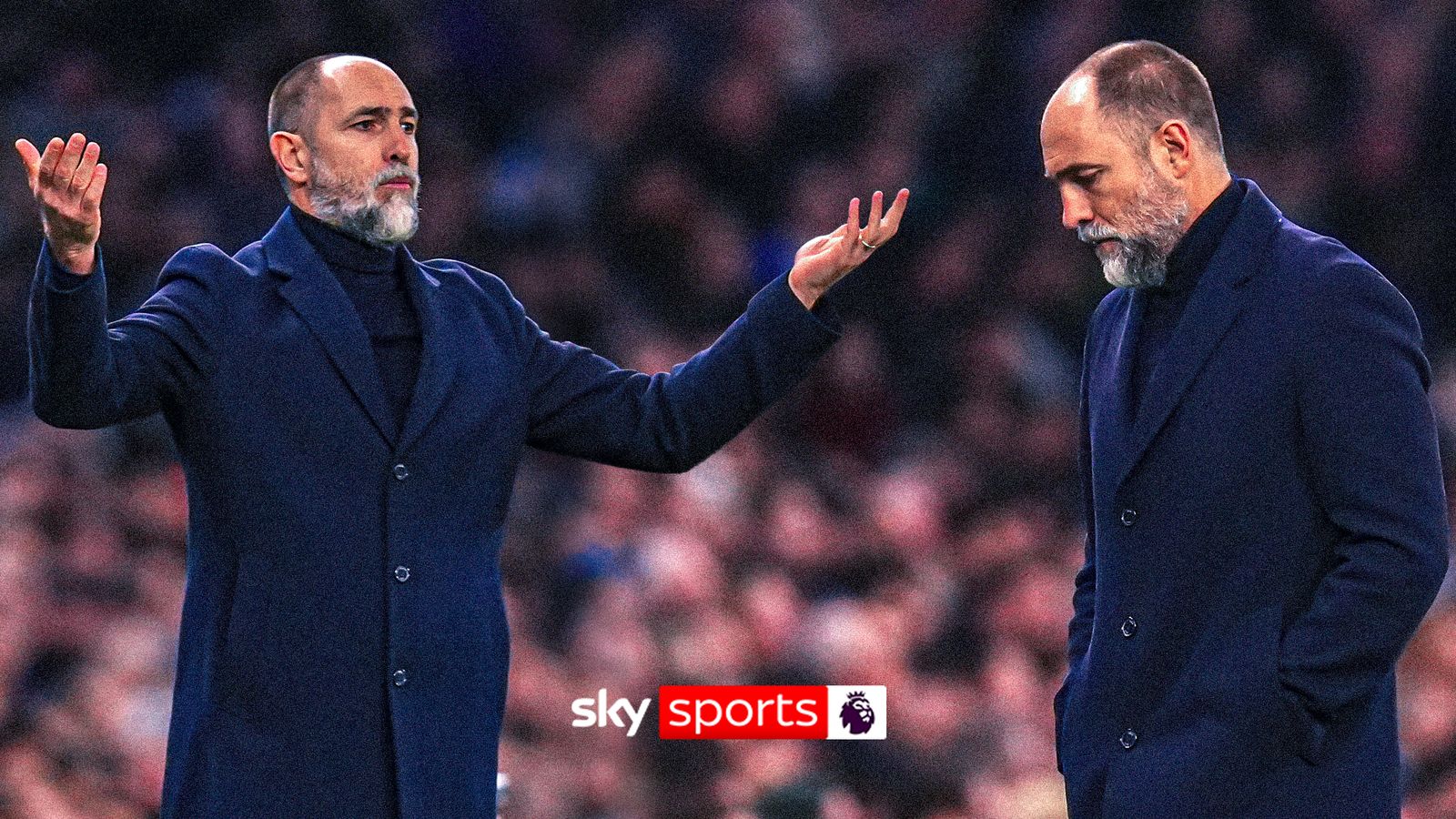
The situation at Tottenham Hotspur is arguably worse. The tactical demands at Hotspur Way are so physically punishing that the players look visibly broken.
Recent reports from TeamTalk indicate the club has already circled an exact date for Igor Tudor's exit. The situation is incredibly delicate due to off-field personal struggles. The board is acting with severe caution.
"Spurs must act delicately given personal struggles."
But strictly on the pitch, the footballing decision has clearly already been made. The defensive regression has been absolute.
Tudor operates a notoriously demanding 3-4-2-1 system. It is based on aggressive, full-pitch man-to-man pressing. When it works, it suffocates opponents.
We saw it function at Verona. We saw flashes of it during his stint at Marseille. But it requires a squad built of pure granite. It requires absolute, unquestioning mental buy-in.
Tottenham do not possess that squad. They have a roster built over several years for possession and positional fluidity. They have been abruptly forced into a gladiatorial pressing scheme.
You cannot play Tudor-ball with defenders who are hesitant to jump out of their shape. The tactical breakdowns are glaring and repetitive.
Look at the responsibilities of the wide center-backs. Under Tudor, they are instructed to follow their designated forward deep into the opposition half. If an opposition striker drops into the center circle, the Spurs center-back is expected to track him the whole way.
If that duel is lost, the entire defensive structure collapses instantly.
Premier League opponents have figured this out. They deliberately overload one side of the pitch, dragging the Spurs markers with them. Then they quickly switch the play into the massive voids left behind.
The Spurs wing-backs are routinely left completely exposed in one-on-one situations. No help arrives, because every other defender is glued to their assigned man elsewhere on the pitch.
It is a suicidal way to defend at this level. The quality of attacking players is simply too high. Tudor refuses to compromise. He will not implement a zonal marking system. He will not drop the defensive line ten yards to protect his slower defenders. It is his way or nothing.
The Napoli sliding doors
This stubbornness is not a new phenomenon. It is deeply ingrained in the modern coaching manual.
We received a fascinating glimpse into a missed tactical connection this week. Sempre Milan reported Gennaro Gattuso's recent revelation about his time at Napoli. He attempted to hijack Sandro Tonali's transfer to AC Milan, trying to bring the young midfielder south instead.
It is an incredible sliding doors moment. Tonali ultimately flourished at Milan. He secured a massive move to Newcastle. He developed into one of the most dynamic box-to-box midfielders in Europe.
But what would have happened under Gattuso at Napoli?
At the time, Gattuso was heavily wedded to a strict 4-3-3 formation. Napoli relied on the technical brilliance of Fabian Ruiz and the late runs of Piotr Zielinski.
Gattuso likely would have deployed Tonali as the solitary deep-lying playmaker. He would have been the traditional regista, sitting flat in front of the back four.
Tonali can pass the ball exceptionally well, but his greatest asset is his engine. He is a combatant. He is a disruptor who excels at pressing high and driving the ball forward.
Asking him to sit static at the base of midfield would have stripped away the exact aggression that makes him special. Gattuso probably would have demanded Tonali play exactly like Andrea Pirlo, simply because they both played for Brescia.
It would have been a disaster. Tonali would have looked like a failure. The fans would have turned on him. It would not have been because he lacked talent. It would have been because the manager failed to understand the player's true physical profile.
Stefano Pioli understood this at Milan. Pioli paired Tonali with Franck Kessie or Ismael Bennacer in a double pivot. He gave Tonali the absolute freedom to hunt the ball and break forward. Pioli adapted his midfield shape to maximize Tonali's strengths.
Adapting to reality
The best managers in the world understand that tactics are a negotiation. You have a preferred style, but you must bend it to fit the reality of your dressing room.
Carlo Ancelotti has built a legendary career on this exact flexibility. He does not force a rigid system onto unwilling players. He looks at his best eleven players and figures out the most comfortable shape to put them in.
Daniel Farke and Igor Tudor are doing the exact opposite. They are staring at their tactical blueprints and furiously wondering why the players keep coloring outside the lines.
For Farke, the solution remains obvious. He needs to speed up the transition play. Drop the obsession with endless possession. Let Gnonto and James attack retreating defenses before they can set up.
Tell Piroe to stay in the penalty box. Let Buonanotte find him. If he makes those simple tweaks, Leeds will score goals for fun. If he refuses, the board will eventually find someone who will.
For Tudor, the situation is terminal. You cannot un-teach a man-to-man pressing system halfway through a brutal season. The physical exhaustion is already baked into the squad's legs. The defensive vulnerabilities are captured on tape for every opposition analyst to exploit.
Spurs have a squad of technical, possession-oriented players. They desperately need a manager who wants the ball, not a manager who treats defending as a series of isolated cage matches.
Football is ultimately a players' game. Systems do not score goals. Tactical shapes do not make recovery tackles. Players do.
When a manager decides his philosophy is more important than his personnel, the clock starts ticking. For Tudor, the alarm is already ringing. For Farke, the snooze button is wearing out.
Read Next
- Spurs medical leak exposes deep dysfunction as Dyche circles
- Life after Salah starts today as Liverpool face Newcastle United
- Roy Keane wants out and Spurs are burning cash again
- Man City's derby demolition exposes United's tactical ceiling
- 🏟 EFL Championship 2025-26 — Promotion Race & Play-Off Final Hub
- 🏆 Europa League Final 2026 — Full Coverage Hub
Adidas UCL League Soccer Ball
Train like a Champions League pro with this iconic design.
Frequently Asked Questions
Why is Daniel Farke facing scrutiny at Leeds United?
What is the main criticism of modern football managers in this article?
Who are the attacking players currently struggling at Leeds United?
How has the influence of managers like Guardiola and Klopp affected football?
Why are managers like Igor Tudor and Daniel Farke considered to be failing?
More Coverage
Michael Skubala takes the hot seat at Ashton Gate
6 hours ago
World Sevens brings high-octane chaos before the World Cup fever hits
6 hours ago
Why Manchester United’s pursuit of Ederson makes tactical sense
14 hours ago
Arsenal must reconcile their tactical past with this final hurdle
16 hours ago
Manchester United are sleepwalking into another summer of uncertainty
18 hours agoHow a weird PSG loan turned Mikel Arteta into a manager
22 hours agoMore Analysis
Why Igor Tudor’s man-to-man experiment at Spurs finally collapsed
2 months ago
Spurs have sacked Igor Tudor, and the underlying numbers explain exactly why
2 months ago
Igor Tudor's Tottenham disaster was entirely predictable
2 months ago
Tottenham's 44-day fever dream is over and the cleanup starts now
1 month, 4 weeks ago
Tottenham's manager search exposes a completely broken tactical blueprint
2 months ago