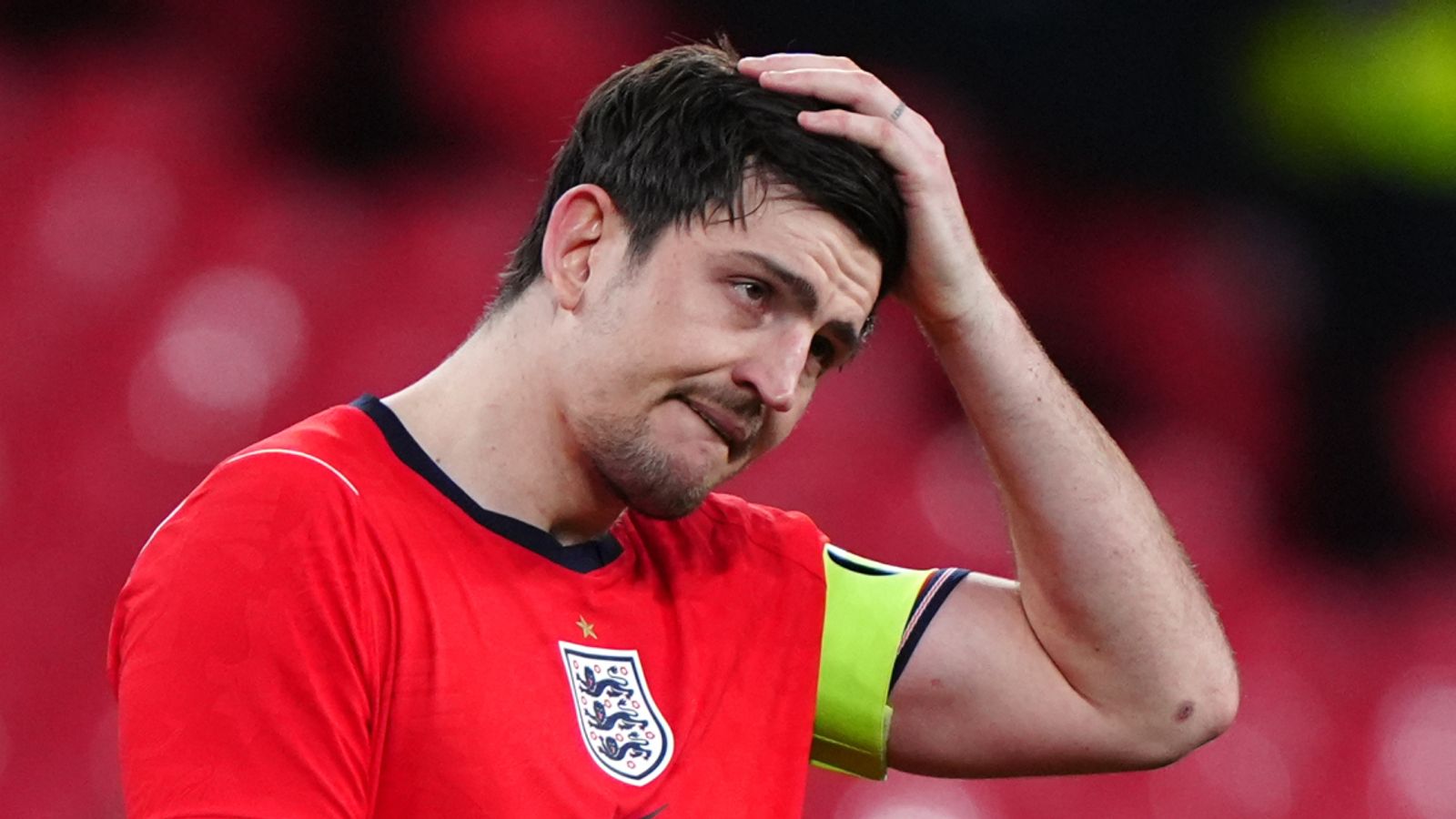
Thomas Tuchel just detonated a tactical bomb under St George's Park.
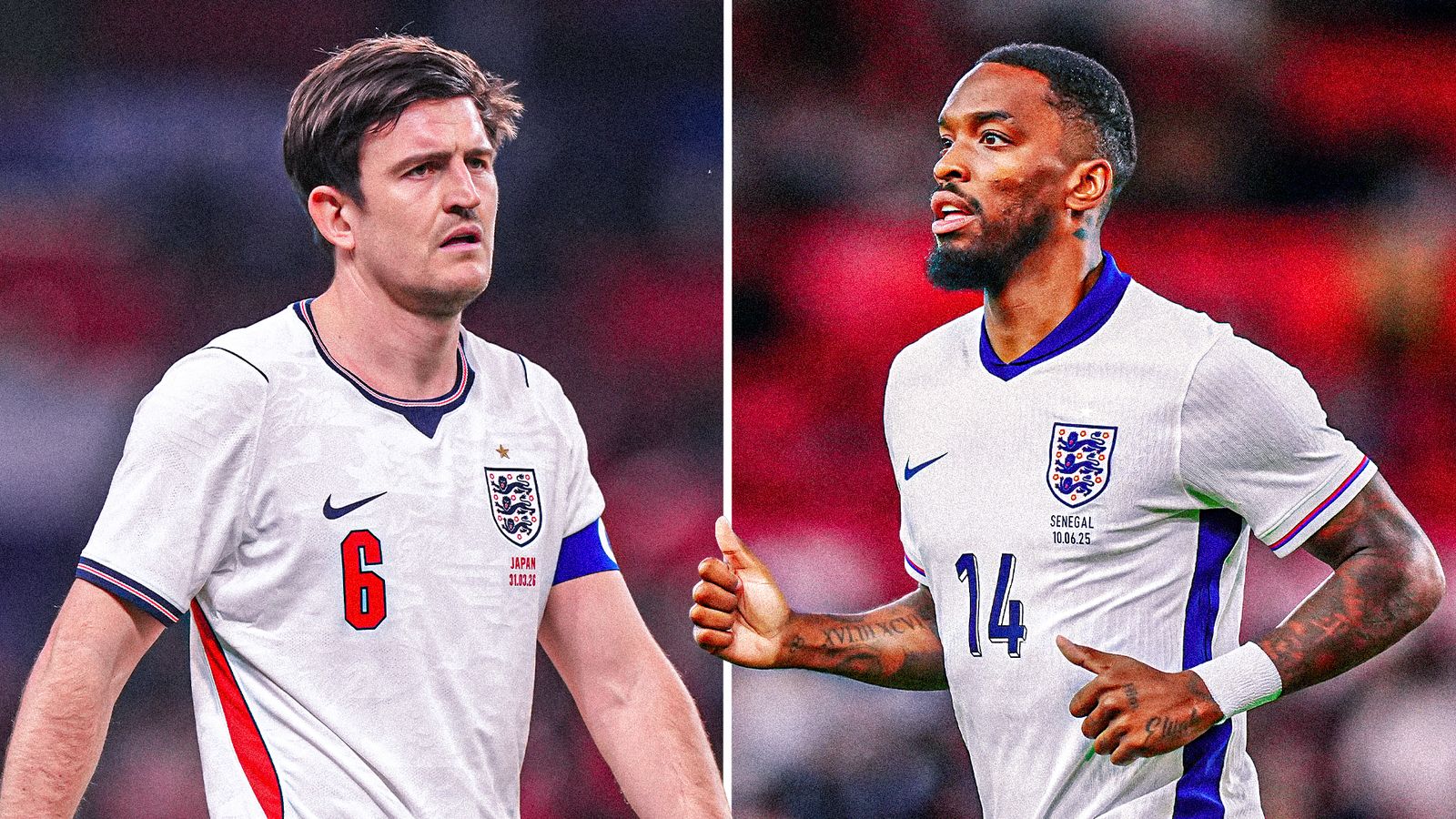
With the World Cup kicking off in exactly three weeks, the England manager has jettisoned Harry Maguire. As Sky Sports reported today, the Manchester United defender is "shocked and gutted" by the omission. He has every right to be surprised. For three consecutive major tournaments, Maguire has been the immovable object at the heart of the national team's defense.
But this decision is not about form. It is about geometry.
Tuchel is making a definitive statement about where England’s defensive line will sit this summer. He is shifting the entire team forward by fifteen yards. That structural change makes a player of Maguire's profile completely obsolete.
The End of the Deep Block
International football is traditionally a conservative enterprise. Managers get very few training sessions. It is infinitely easier to organize a deep, compact block than it is to coordinate an aggressive, high-line press.
Gareth Southgate understood this math perfectly. He built his entire defensive strategy around protecting his center-backs from foot races. The midfield pivot sat deep. The wing-backs tucked in. The distance between the goalkeeper and the center-backs was deliberately minimized.
Southgate's system essentially insulated Maguire from his own physical limitations. He was protected by two holding midfielders who rarely vacated the central zones. This created a heavy defensive shell. Within that shell, Maguire was a colossus. He cleared 92 percent of the balls that entered his zone during his peak tournament runs.
When he is allowed to face the play and defend his penalty area, very few center-backs in Europe are better at repelling crosses. He dominates aerial duels. He puts his massive frame in the way of shots.
But that era is entirely dead. Tuchel does not do deep blocks. He demands total territorial control.
Control requires pinning the opposition in their own half. To achieve that, your center-backs must step up to the halfway line. They must squeeze the playable space. This is where Maguire’s physical limitations transition from a minor flaw into a fatal systemic weakness.
When your defensive line is resting forty yards from your own goal, recovery pace is mandatory. If a pressing trigger fails and the opposition midfield breaks the first line, the center-backs are suddenly exposed. They have to sprint backward into massive acres of green grass.
Maguire cannot survive in that open space. He turns heavily. Opposing elite forwards know exactly how to target him. If Tuchel plays a high line with Maguire on the pitch, every single opposition transition will result in a ball played directly into the channel behind him.
Tuchel knows he cannot hide a slow center-back in a high-pressing system. So he brutally cut him.
The Build-Up Problem
Defensive pace is only half the equation. The other half involves what happens when England actually has the ball.
Maguire is frequently praised for his progressive passing. The underlying numbers usually support this claim. He is capable of driving out from the back and clipping accurate diagonal balls out to the wingers.
But there is a massive catch. Maguire needs time on the ball to execute those long passes. He routinely takes multiple touches to set his feet. He needs the picture in front of him to be completely static for a brief moment before he pulls the trigger.
Tuchel’s attacking structure relies on rapid, one-touch ball circulation. Look at how he operated at Chelsea or Bayern Munich. The center-backs are the primary playmakers, but they do it through rapid distribution, not slow progression.
If a team presses in a basic block, the center-back must split the front two with a first-time pass. Maguire simply lacks the fast-twitch reflexes to execute those specific passing angles under intense, sudden pressure.
Taking three touches to control and pass the ball slows down the entire attacking mechanism. It gives the defending team two extra seconds to shuffle across and plug the gaps. In elite international football, two seconds is an eternity.
By removing Maguire, Tuchel is signaling a desire for violent ball speed across the back line. He wants defenders who receive the ball on the half-turn and punch it instantly through the pressing lines.
A Massive Gamble on Cohesion
This is where we must apply some heavy criticism to Tuchel’s masterplan. It is incredibly arrogant to treat an international squad exactly like a club side.
Tuchel is acting as if he has a six-week pre-season camp in July to drill these complex pressing triggers. He does not. He has exactly 21 days before the World Cup begins.
Teaching a back four to operate a synchronized high line takes months of daily repetition. The defenders need to know exactly when to drop, when to hold, and when to step up to play the offside trap. If one player misreads the trigger by a fraction of a second, the entire trap fails entirely.
Dropping a veteran who has anchored the defense through multiple high-pressure knockout games is a massive risk to squad stability. Maguire knows exactly how to navigate the suffocating anxiety of a major quarter-final. He knows how to manage a game when the team is suffering against the run of play.
Tuchel is throwing away all that institutional memory for the sake of strict tactical purity. It assumes that frantic white-board instruction can immediately override the chaos of a major tournament.
You cannot just plug faster defenders into a backline and expect a functional offside trap. Without telepathic communication between the center-backs, speed simply means you run toward your own goal faster while the opposition striker scores.
The Quarter-Final Prediction
So, how does this tactical gamble play out in North America? We are going to see two completely distinct versions of England.
During the group stages, the high line will look like a stroke of genius. England will totally suffocate weaker opposition. They will win the ball high up the pitch repeatedly. They will record massive possession stats and look like a slick, modern Champions League-caliber side.
The public will rush to praise Tuchel. Pundits will claim the tactical handbrake has finally been removed. The decision to drop Maguire will be completely vindicated in the court of public opinion.
But international tournaments are never won in the group stages. They are decided in the chaotic, exhausted margins of the knockout rounds.
There is a reason France won the 2018 World Cup and reached the final in 2022 playing relatively conservative, transitional football under Didier Deschamps. Deschamps understands the assignment. You minimize variables in a short tournament. You build a solid base.
Tuchel is doing the exact opposite. He is multiplying the variables. He is injecting massive tactical complexity into a squad that barely plays together.
My prediction is absolute. England will comfortably navigate the groups and the Round of 16 playing beautiful, aggressive football. But they will hit a brutal reality check in the quarter-finals.
They will face a top-tier nation armed with elite wide forwards. That opposition will gladly surrender possession. They will sit deep, absorb the pressure, and wait patiently for the inevitable passing mistake.
When the mistake happens in the midfield, the trap will spring. The ball will be launched instantly into the massive, empty space behind England's aggressively high defensive line.
Tuchel’s shiny new, fast center-backs will be caught out of position because they haven't had the years of collective training required to perfect the offside trap. Their physical pace advantage will be entirely negated by poor starting positions.
England will get brutally exposed in transition. They will lose a knockout game precisely because they pushed too high, too fast, without the underlying defensive cohesion required to pull it off. Tuchel's gamble will end in familiar heartbreak.
Read Next
- Tuchel just ended the Harry Maguire era and the numbers explain why
- Tuchel’s plan to bring Levi Colwill to the World Cup is pure chaos
- Tuchel's Friday cull and the $50 tickets saving a corporate World Cup
- Tuchel's 16 guarantees and the massive tactical headache facing England
- 🏆 World Cup 2026 — Full Coverage Hub
- 🏴 England World Cup 2026 — Three Lions Hub